Amazon Lex
Amazon Lex is a fully managed artificial intelligence service that leverages natural language understanding (NLU) and automated speech recognition (ASR) to empower chatbot developers and designers to build chatbots that interact with people through audio, text and DTMF — and can be deployed across different channels.
Unlock the full case studyOverview
Lex launched in 2016 with a long focus on APIs and SDKs for developers. When the Lex V2 console arrived in 2021, the team began investing in the console itself — building for conversation designers, product managers and business owners who never write a line of code. I joined in January 2022 as UX lead to deliver urgent design work and set the foundation for the Lex UX team.
The organization was complex: four product managers on interconnected features, four engineering teams, almost no consolidated documentation, and a four-month UX backlog across five projects due in two. I worked it from three angles — learn and document, plan and prioritize, execute and deliver — while leading design and research on two flagship features: the Automated Chatbot Designer and the Visual Conversation Builder.
Highlights
- Built the team's UX operating foundations: a shared UX project tracker, reusable onboarding guides, a console sitemap, and an improvement-items process adopted across PM and engineering
- Initiated and led UX research — 14 interview sessions in two weeks — and created the team's first personas library and journey maps
- Created a shadowing mechanism that put 12 engineers and managers into live customer interviews, promoting a user-centric culture
- Carried the Automated Chatbot Designer from preview to general availability, redesigning every step of its main workflow
- Led design and research for the Visual Conversation Builder, which launched publicly in September 2022
Work Example 1 — Automated Chatbot Designer
Conversation design is the slowest part of building a chatbot: analysts read through thousands of lines of call transcripts to find the intents customers actually raise, separate the ones that overlap, and collect the information each intent needs to be fulfilled. The Automated Chatbot Designer does that first pass with machine learning — point Lex at real contact-center transcripts and it returns an initial bot design in hours instead of weeks.
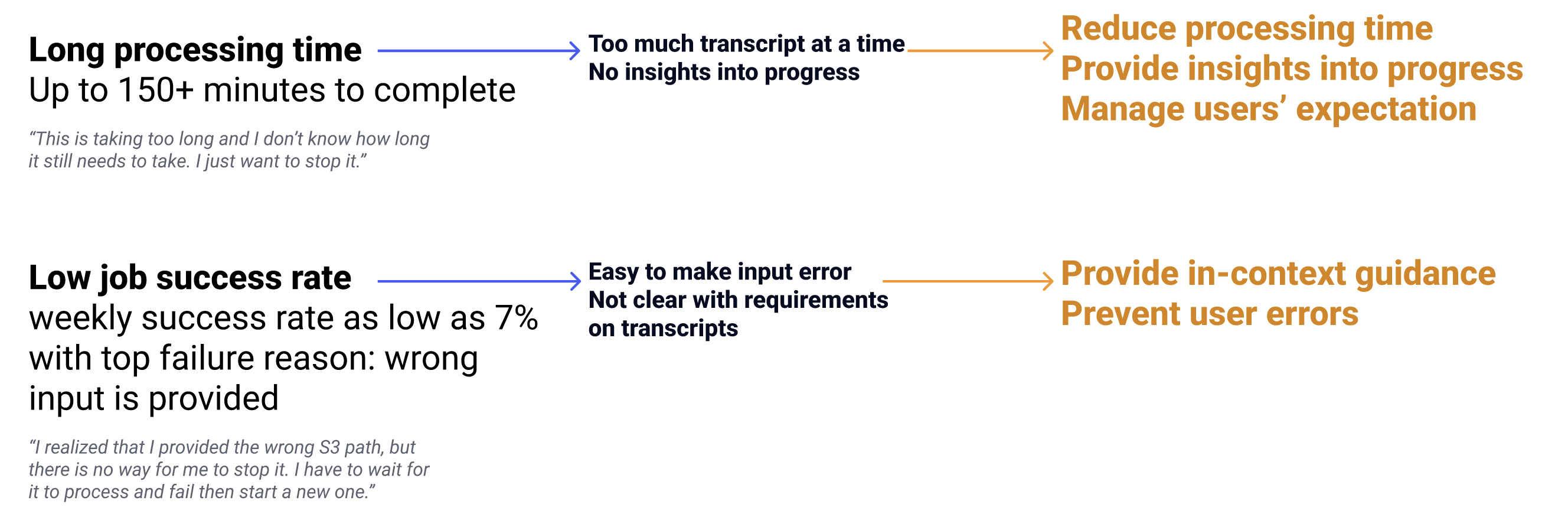
The feature was still in preview when I joined in January 2022, with customer feedback arriving faster than it was being resolved. Two problems dominated it: processing that ran up to 150+ minutes with no visibility into how far along it was, and a weekly job success rate as low as 7%, where the top failure reason was simply that the wrong input had been provided. I led the design work that carried the feature to general availability in June 2022 — tracing each problem from symptom to cause to set the goals, then working with the product manager and engineering teams to redesign every step of the main workflow.
Uploading transcripts got a standard S3 resource selector in place of two confusing paths to a bucket. Waiting for processing became transparent and interruptible, with a stop action, steps-based progress, and email and SMS notifications so no one has to sit and watch the console. Reviewing discovered intents was decluttered, with counters that clarify what's actually selected. And evaluating intent quality now shows sample utterances alongside the conversations behind them, so a designer can judge machine output on evidence instead of jumping between screens.
Each change removed a reason a customer might abandon the feature partway through — together, the difference between a promising preview and a service teams could rely on in production.
Work Example 2 — Visual Conversation Builder
Conversation designers were juggling spreadsheets for slots and prompts and a zoo of diagramming tools for flows — then waiting on developers to implement every design just to test it. The question I framed the work around: how do we make it easy for low-code and no-code users to create conversation flows in Amazon Lex?
The answer inverts the old editor. Instead of burying the conversation in configuration forms, a drag-and-drop canvas makes the flow the primary surface, shows the whole conversation in a single view, and brings configurations into context as you select each block.
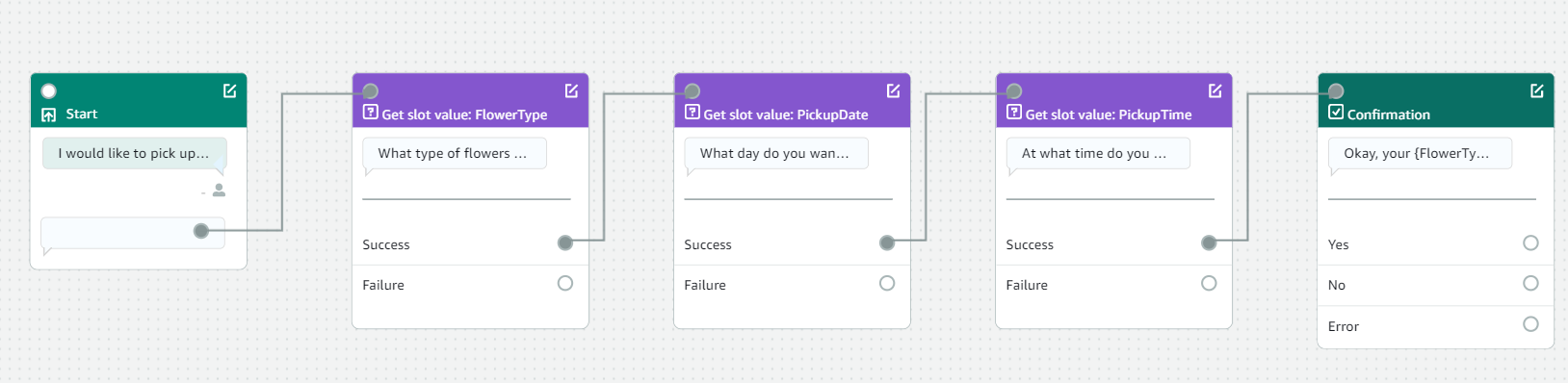
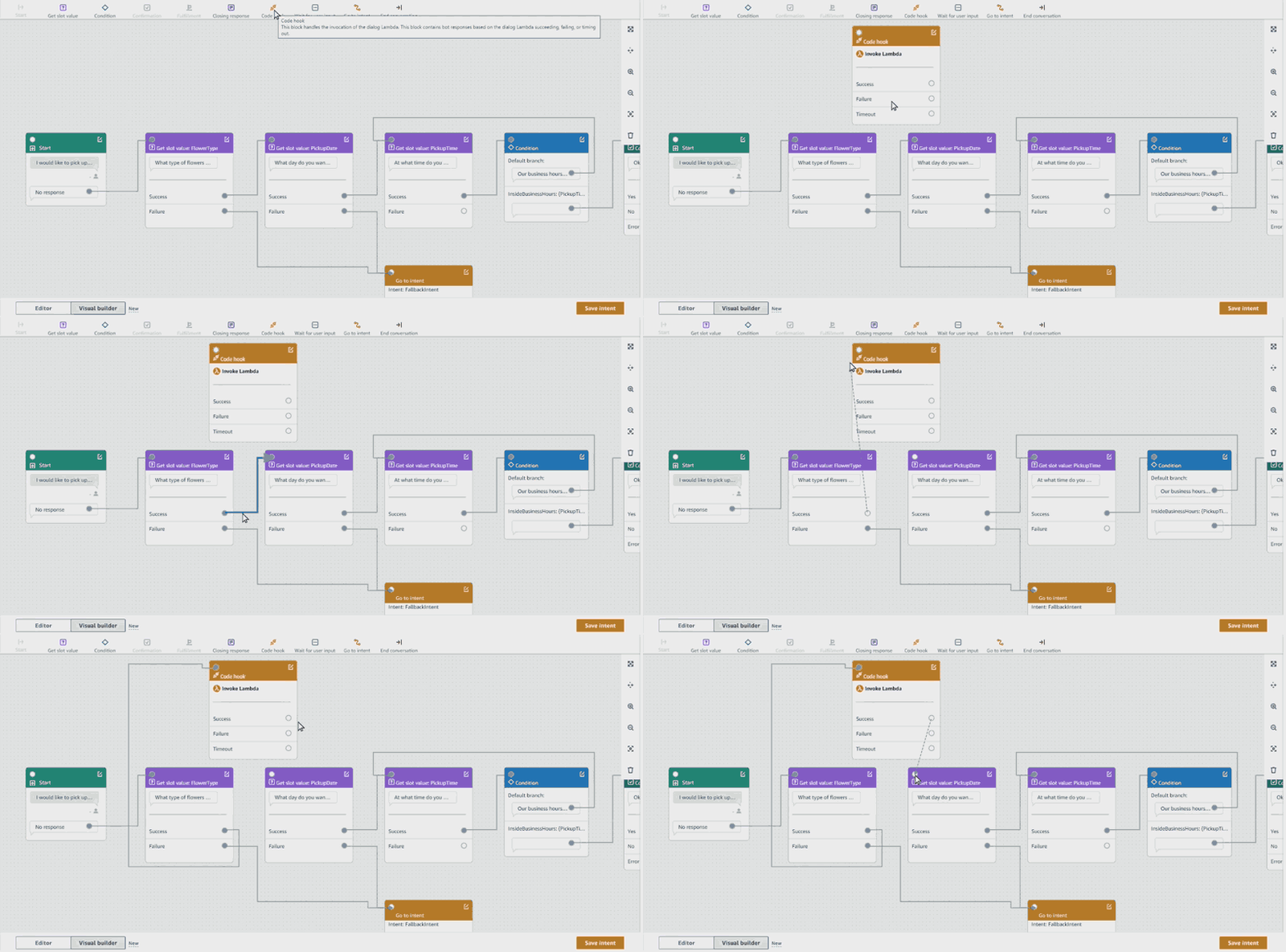
Conditional branching no longer requires writing a Lambda function, so designers can shape logic themselves and hand a working flow to engineers rather than a diagram to translate.
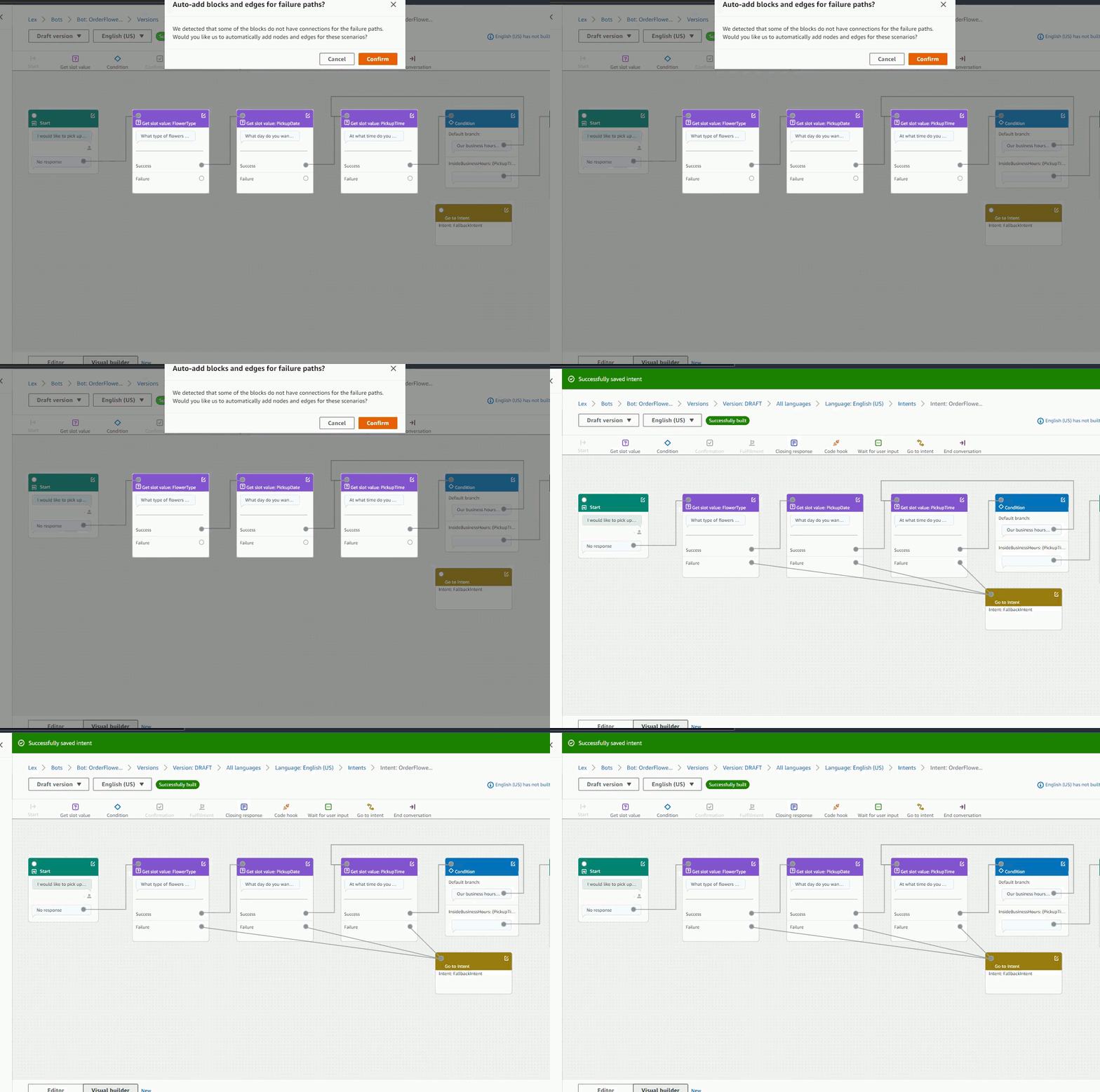
The canvas also watches for what's missing: it detects blocks with unconnected failure paths and offers to add the blocks and edges for you — one of the details that came directly out of usability testing.
Impact
- 30% less time to build a basic conversation flow
- Launched September 2022 at no additional cost, in every AWS Region where Amazon Lex V2 is available — AWS partner NeuraFlash publicly called the drag-and-drop flow "a game-changer for reinventing the contact center experience"
- The UX foundations shipped into the team's day-to-day workflow, and the Automated Chatbot Designer improvements landed across the console
The full case study walks through the challenges, the mechanisms I set up, the research behind each decision, and before/after design work for both features.
Want the full story?
The complete case study — problem framing, process, design artifacts and outcomes — is available with a password. Don't have it? Get in touch.
Unlock the full case study